
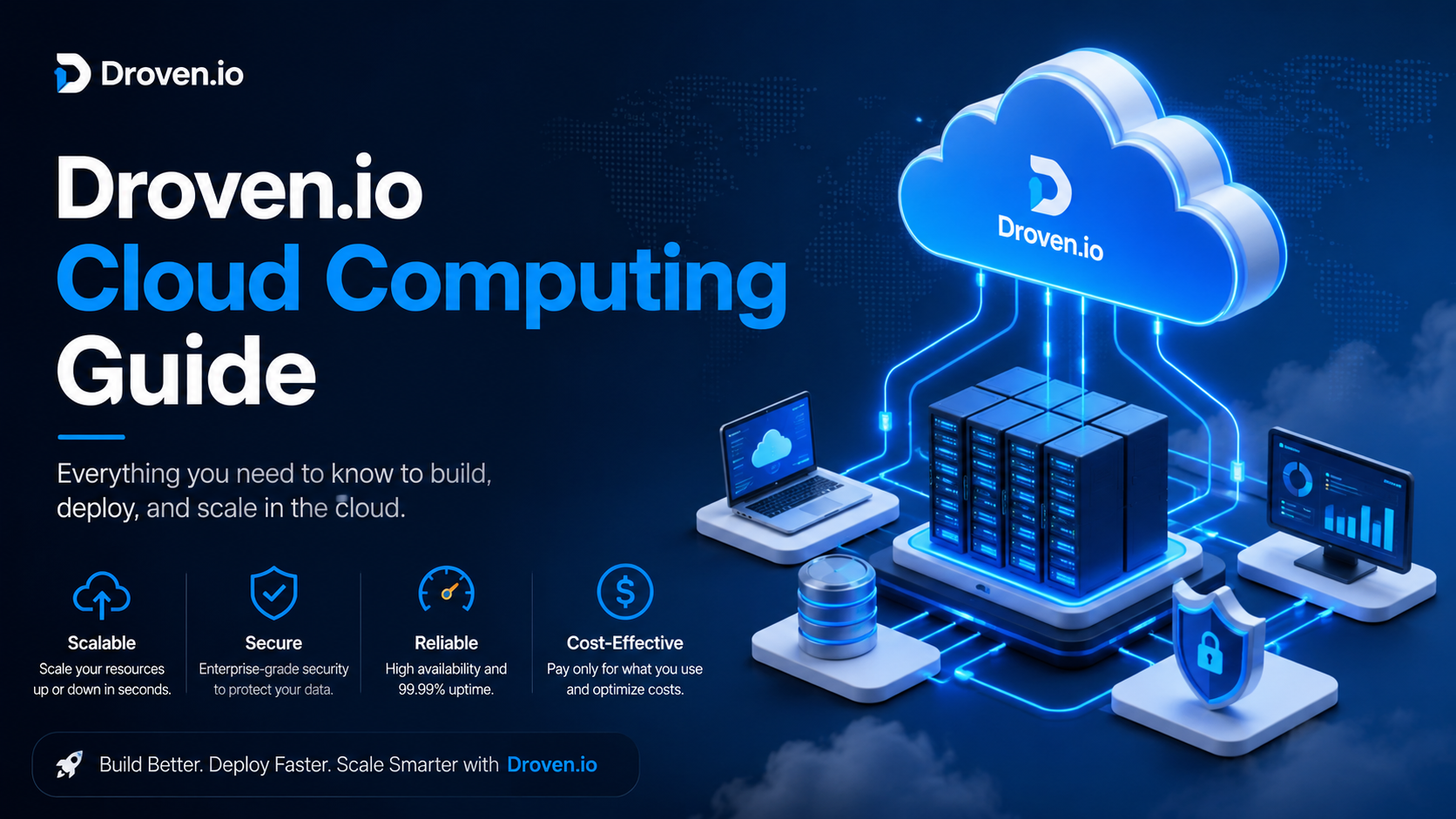
Cloud computing has become a cornerstone of modern technology, revolutionizing how businesses, developers, and organizations manage data, applications, and infrastructure. As the demand for scalable and flexible computing resources grows, platforms like Droven.io provide innovative solutions for seamless cloud integration. This comprehensive guide aims to provide an in-depth understanding of Droven.io Cloud Computing Guide, exploring its features, use cases, deployment strategies, and best practices for both beginners and seasoned professionals.
Understanding Cloud Computing
Cloud computing is the delivery of computing services—including servers, storage, databases, networking, software, analytics, and intelligence—over the internet, or “the cloud.” This model enables faster innovation, flexible resources, and economies of scale. Users can access cloud services on-demand, paying only for what they use. With cloud computing, organizations can avoid the upfront cost and complexity of owning and maintaining physical servers, instead relying on providers like Droven.io to handle infrastructure, security, and maintenance.
At its core, cloud computing offers several deployment models: public, private, and hybrid clouds. Public clouds provide services over the internet and are shared across multiple organizations. Private clouds offer dedicated resources to a single organization, providing greater control and security. Hybrid clouds combine both public and private cloud infrastructures, allowing businesses to leverage the advantages of both while optimizing costs and performance.
Introduction to Droven.io
Droven.io is a next-generation cloud computing platform designed to simplify the deployment, management, and scaling of cloud-based applications. With a focus on ease of use, flexibility, and advanced features, Droven.io caters to startups, SMEs, and large enterprises alike. Unlike traditional cloud providers, Droven.io emphasizes an intuitive user interface and automation capabilities, making cloud adoption faster and more efficient.
Droven.io provides a range of services including compute, storage, networking, database management, and security tools. Its API-first approach ensures seamless integration with existing systems, while its orchestration tools enable automated provisioning, monitoring, and scaling of resources. With Droven.io, organizations can focus on innovation rather than infrastructure management.
Key Features of Droven.io Cloud Computing
One of the most significant reasons for Droven.io’s popularity is its comprehensive set of features designed to enhance efficiency and reduce operational overhead. Some of its core features include:
- Scalable Infrastructure: Droven.io allows dynamic scaling of resources, ensuring that applications can handle variable workloads without downtime.
- Automated Deployment: The platform supports automated provisioning and deployment of applications, reducing manual configuration and human error.
- Security and Compliance: Advanced encryption, identity management, and compliance frameworks are built into Droven.io, safeguarding sensitive data and applications.
- High Availability: Droven.io ensures continuous availability of services through redundant infrastructure and robust failover mechanisms.
- User-Friendly Dashboard: Its intuitive interface provides detailed insights into system performance, resource usage, and operational metrics.
By combining these features, Droven.io empowers organizations to achieve greater operational efficiency, faster time-to-market, and improved system reliability.
How Droven.io Supports Different Cloud Models
Droven.io is versatile, supporting various cloud deployment models to suit organizational needs:
- Public Cloud: Droven.io offers shared resources with strong security and compliance, making it ideal for startups or organizations looking for cost-effective solutions.
- Private Cloud: Organizations requiring strict data control and privacy can deploy applications in a private environment, fully managed by Droven.io.
- Hybrid Cloud: For businesses needing flexibility, Droven.io integrates public and private cloud resources, enabling optimized workloads and cost management.
The flexibility of Droven.io’s architecture allows organizations to scale efficiently, handle complex workloads, and maintain high levels of security.
Getting Started with Droven.io
Starting with Droven.io is straightforward. First, users need to create an account on the platform. The onboarding process is streamlined, guiding users through configuration, resource provisioning, and deployment steps. Once set up, users can leverage Droven.io’s cloud dashboard to monitor and manage resources, create virtual machines, deploy containers, and configure network settings.
Droven.io provides pre-configured templates and deployment scripts, reducing the learning curve for beginners. Developers can focus on building applications while the platform handles infrastructure tasks. Additionally, Droven.io supports integration with popular development tools and CI/CD pipelines, enabling continuous deployment and agile workflows.
Benefits of Using Droven.io for Businesses
Organizations adopting Droven.io experience numerous benefits, including:
- Cost Efficiency: Pay-as-you-go pricing models reduce unnecessary expenses on hardware and maintenance.
- Enhanced Productivity: Automated infrastructure management allows IT teams to focus on strategic tasks rather than routine maintenance.
- Scalability: Businesses can easily adjust computing resources based on demand, ensuring consistent performance.
- Robust Security: Built-in security features protect sensitive data and maintain regulatory compliance.
- Reliability: High availability and disaster recovery mechanisms minimize downtime and service interruptions.
For startups and enterprises alike, Droven.io enables a smooth transition to the cloud, reducing complexity and accelerating innovation.
Advanced Features and Use Cases
Beyond basic cloud hosting, Droven.io supports advanced capabilities for enterprises with complex requirements. These include:
- Container Orchestration: Deploy and manage Docker and Kubernetes containers seamlessly.
- Serverless Computing: Execute functions without managing servers, ideal for event-driven workloads.
- Big Data and Analytics: Process large datasets with scalable compute resources, integrating with analytics tools for actionable insights.
- Machine Learning Integration: Train and deploy AI/ML models using cloud resources efficiently.
These advanced features make Droven.io a versatile platform suitable for software development, data processing, AI workloads, and enterprise applications.
Best Practices for Using Droven.io
To maximize the potential of Droven.io, organizations should follow best practices:
- Plan Resource Allocation: Understand workload requirements to allocate appropriate resources and avoid overspending.
- Implement Security Measures: Use identity management, encryption, and access controls to protect sensitive data.
- Monitor Performance: Utilize Droven.io’s monitoring tools to track system performance and optimize workloads.
- Automate Workflows: Leverage scripts and templates to streamline deployment and scaling.
- Regular Backups: Schedule automated backups to prevent data loss in case of failures.
Following these practices ensures optimal performance, security, and cost efficiency while using the platform.
Common Challenges and How to Overcome Them
While Droven.io offers powerful cloud solutions, users may encounter challenges:
- Learning Curve: Beginners may find initial setup and configuration complex, but pre-configured templates and guides can mitigate this.
- Resource Management: Misallocation of resources can lead to inefficiencies; monitoring and optimization are crucial.
- Security Concerns: Although Droven.io provides strong security features, users must actively configure and maintain security policies.
By proactively addressing these challenges, organizations can maximize the benefits of Droven.io cloud services.
Future of Droven.io and Cloud Computing
Cloud computing continues to evolve rapidly, and Droven.io is well-positioned to leverage emerging trends such as edge computing, AI-driven automation, and serverless architectures. As organizations increasingly adopt cloud-first strategies, platforms like Droven.io will play a pivotal role in enabling scalable, secure, and cost-effective cloud solutions.
The integration of AI and machine learning, combined with advanced automation, promises to reduce operational complexity further, enhance analytics capabilities, and enable smarter resource allocation.
Conclusion
The Droven.io Cloud Computing Guide provides an essential roadmap for both beginners and experts seeking to leverage cloud technology efficiently. From understanding core cloud concepts to exploring advanced features and deployment strategies, Droven.io offers a robust platform that combines scalability, security, and user-friendly management. By following best practices and staying informed about evolving trends, organizations can harness the full potential of cloud computing with Droven.io, driving innovation, efficiency, and growth in the digital era.